




Best Chemistry Books for JEE Main, NEET, and Board Exams (Complete Guide)
Chemistry is one of the most scoring subjects in competitive exams.
If students use the right books and the right strategy, they can score very high marks in exams like Joint Entrance Examination Main (JEE Main), National Eligibility cum Entrance Test (NEET), and CBSE Class 12 Board Examination.
Many students study a lot but still do not get good marks. The reason is simple.
They use too many books or follow the wrong method.
In this article on Chemfunda.com, we will explain:
-
Best Chemistry books for JEE Main, NEET, and Boards
-
How to study these books properly
-
Strategy to score near 100% marks in chemistry
-
Common mistakes students make
-
Frequently Asked Questions
Why Chemistry is a High-Scoring Subject ?
Chemistry is different from physics and mathematics.
Chemistry questions are often:
-
Direct
-
Concept-based
-
Memory-based
-
Formula-based
If your concepts are clear and revision is strong, you can score full marks or near full marks.
Chemistry has three main parts:
-
Physical Chemistry
-
Organic Chemistry
-
Inorganic Chemistry
Each part needs a different study method.
Most Important Chemistry Books for JEE Main, NEET and Boards
Below are the most trusted books used by toppers.
1. NCERT Chemistry (Most Important Book)
The most important book for chemistry is NCERT Chemistry Textbook.
For exams like Joint Entrance Examination Main, National Eligibility cum Entrance Test, and CBSE Class 12 Board Examination, many questions come directly from NCERT lines.
Why NCERT is Important
-
Clear concepts
-
Simple language
-
Important reactions
-
Diagrams and tables
-
Exam-oriented content
How to Study NCERT
-
Read every line carefully.
-
Highlight important lines.
-
Learn all reactions.
-
Memorize tables and exceptions.
-
Solve all back exercise questions.
Students who master NCERT can easily score 80-90% marks.
Best Books for Physical Chemistry
Physical chemistry needs numerical practice and concept clarity.
Good books include:
-
Physical Chemistry by O. P. Tandon
-
Physical Chemistry by P. Bahadur
-
Numerical Chemistry by P. Bahadur
Study Strategy
-
First understand theory.
-
Write formulas in a separate notebook.
-
Solve examples.
-
Practice numerical problems daily.
Daily practice improves speed and accuracy.
Best Books for Organic Chemistry
Organic chemistry is about concepts and reaction mechanisms.
Recommended books:
-
Organic Chemistry by Morrison and Boyd
-
Organic Chemistry by O. P. Tandon
How to Study Organic Chemistry
-
Understand the reaction mechanism.
-
Learn electron movement.
-
Practice name reactions.
-
Revise reactions daily.
Never try to memorize without understanding.
Best Books for Inorganic Chemistry
Inorganic chemistry requires strong memory and revision.
Recommended books:
-
Concise Inorganic Chemistry by J. D. Lee
-
Inorganic Chemistry by O. P. Tandon
Study Strategy
-
Read NCERT many times.
-
Make short notes.
-
Learn trends and exceptions.
-
Revise regularly.
Inorganic chemistry becomes easy with frequent revision.
Frequently Asked Questions (FAQ)
1. Which book is best for chemistry in JEE Main?
The most important book is NCERT Chemistry Textbook.
After that, students can use Physical Chemistry by O. P. Tandon and Organic Chemistry by Morrison and Boyd.
2. Is NCERT enough for NEET chemistry?
Yes. For National Eligibility cum Entrance Test, most questions come from NCERT Chemistry Textbook.
Students should read NCERT multiple times.
3. How many books should I study for chemistry?
Students should focus on 2–3 good books only.
Studying too many books creates confusion.
4. How can I score 100 marks in chemistry?
To score full marks:
-
Master NCERT
-
Solve previous papers
-
Practice daily
-
Revise regularly
5. Which part of chemistry is easiest?
Many students find Inorganic Chemistry easiest because it is mostly memory-based.
But with the right method, all parts become easy.
Final Advice for Students
Chemistry is a scoring subject.
With the right books and proper guidance, students can score very high marks in Joint Entrance Examination Main, National Eligibility cum Entrance Test, and CBSE Class 12 Board Examination.
Stay consistent. Revise regularly. Practice questions daily. Success will follow.
Tag:Course

You may also like
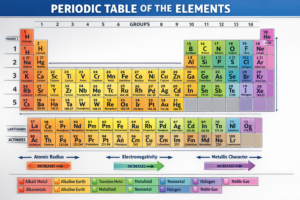
🧪 Periodic Table of Elements – Easy Explanation for Students

Our ClassesTeaching Method by Dhruv Sir Our Classes